
Virtual reality isn't just a viewmaster for your video games. It's an entirely new medium whose true purpose is slowly being realized. Here are a few of the ways VR will be used over the next few years.
Virtual Reality for the Entertainment Industry
From films made by Hollywood to live-streamed concerts and theatrical experiences, VR has become a place to view videos that surround you. New cameras are being created to capture these VR stories, and tools to upload and livestream them are growing in number. Soon, these experiences might not even seem like films at all.
Music and Virtual Reality
There are several types of virtual reality experiences that are available for music. Artists like Taylor Swift, Queen, and Björk have already begun incorporating VR into their portfolio of music experiences. 360 VR videos taken at concerts provide fans with a life-like concert experience without having to actually attend.
The second type of virtual reality experience available is a completely simulated version of a concert, complete with avatars of the band and audience members. Katy Perry, The Weeknd and Cold Play all have plans to include a virtually simulated concert experience into their repertoire.
Live VR experiences for the music industry are becoming increasing popular as well. Fans can put on their VR headset and experience the concert or festival as it's happening.
Cinema and Virtual Reality
As virtual reality continues to evolve, we are seeing an increasing presence of cinema pieces hitting the market. The Tribeca Film Festival debuted 29 VR projects this past year, joining the likes of Disney and Warner Brothers who have also released their own VR content. VR can be a great way to bring cinema to life through a portable movie screen with synced headsets or a standalone VR theater.

Virtual Reality for the Artistry & Design Industry
Imagine building a real home with virtual tools, or designing parts for a new car as if it already existed in the real world. Imagine painting a living and breathing 3D masterpiece that you are able to walk through and explore. Digital art apps and wand-like controllers are already making virtual reality an amazing playground for artists.
The release of Google's Tilt Brush in 2016 made way for the collision of the art and virtual reality industries. VR is breaking down barriers in sculpture, painting, set design, photography and architecture across the globe. Users are able to create and share digital galleries for viewing, much easier than ever before.
Virtual Reality for the Gaming Industry
As virtual reality continues to expand into other industries, video games remain one of the main applications for virtual reality as of today. But VR will give game designers the freedom to take games to incredible new places. They can also find new audiences now that players can just reach out and touch things, and turn their head to look, instead of mastering a complex controller covered with joysticks and buttons. With the release of Ready Player One in April 2018, gamers and non-gamers alike are being drawn to the possibility of being able move, walk around and otherwise be free to interact with virtual gaming worlds like never before.


Disney has already been in the works to create a haptics jacket that allows gamers to feel the likes of a being hit by a snowball or having a snack slither over their body. As we see technology continue to develop with the advancement of VR motion platforms, haptic suits and other unique add-ons, businesses and developers alike will be able to create experiences that directly coordinate with their brands and clients intended use.
Virtual Reality for the Education Industry
Medicine, chemistry, physics, astronomy: VR can model the world in an incredibly visual way. And, it can also allow those worlds to be expanded and shrunk, played with and entered. Students could take a class trip to ancient Egypt, or try an open-heart surgery without any risks: VR simulations can offer practice runs at techniques, designs and ideas.
Field Trips for Students in Virtual Reality
Field trips directly coordinate with a student's understanding of the world, an experience, or historical event. Students learn many things in school but being able to immerse themselves in the world they are learning can help increase understanding and retention of the lesson. With the implementation of virtual reality in the classroom, students can now take "field trips" multiple times a week, instead of once a year. Not to mention, students who have been previously left out due to lack of monetary support from their families are able to be on the same playing field as everyone else.


Virtual Reality and Special Needs Children
Traditionally, it has always been challenging to deliver a quality educational experience to students with special needs. With VR, such students have a way to easily access deep learning regardless of their developmental or cognitive challenges. Virtual Reality levels the playing field, giving the same learning opportunities to all.
Virtual reality can be viewed as assistive technology, due to its potential to minimize or offset the effects of a disability and provide an alternative means for an individual to accomplish a particular task. For children with disabilities, children are able to explore or create new environments in a manner that allows them to manipulate objects and experience what would normally be difficult or impossible for them to experience in real life.
Pictured below are drawings created from students' experience with the Tru Blue Whale encounter in VR. One student being quoted to say, "All of a sudden a big whale just [came] in and [stopped] there, [looked] at me. I just looked into his eyes. All the fish swam away. When he left, it felt like he was going to slap me with his flipper and hit me with his tail until he almost hit the ship….”


Virtual Reality for the Tourism Industry
Virtual tourism is the next best thing to being in your target travel destination. You could visit London, Venus, or even scuba dive The Great Barrier Reef. Whether you’re watching a 360-degree video someone shot, or a computationally generated 3D simulation, you can shut out the real world and replace it with your destination of choice, or zoom right to that destination with the Google Earth and Oculus integration. VR provides tourism professionals the perfect addition to their marketing portfolio to drive awareness and travelers to their destination. The Wildlife Trust of South and West Whales recently completed two VR experiences for their tourism prospects, with 85% of people who had watched the videos responding to a survey saying they would visit Wildlife Trust attractions

Hotel Tourism & VR
Hotels are also jumping on board with VR train, providing virtual tours of their grounds and available rooms. We predict it won't be long before all tour operators are prepared to have a VR experience that shows off their service offerings in each of their locations.
Virtual Reality for the Psychology & Meditation Industry
VR can become a private space for your mind — a place to relax and think. Or it can be a place to explore something uncomfortable in a protective simulation. Virtual worlds can be very removed from the real world, or be labs to explore human behavior. Studies have shown that VR is so distracting, it can be a surprisingly effective painkiller compared with traditional medicine.
VR’s extraordinary ability to create powerful simulations of the scenarios in which psychological difficulties occur is shaping the future of the industry. Suddenly there’s no need for a therapist to accompany a client on a trip to a crowded shopping centre, for example, or up a tall building. Situations that are more or less impossible to build into a course of therapy — flying, for example, or the shocking events that often lie behind PTSD — can be conjured at the click of a mouse.
Because VR is not real that a patients reservations tend to disappear. We’ll do things in VR that we’d be reluctant to try in normal life. Yet although the computer-generated environment is artificial, our mind and body behave as if it were natural. And that means that the lessons we learn in VR transfer to the real world.
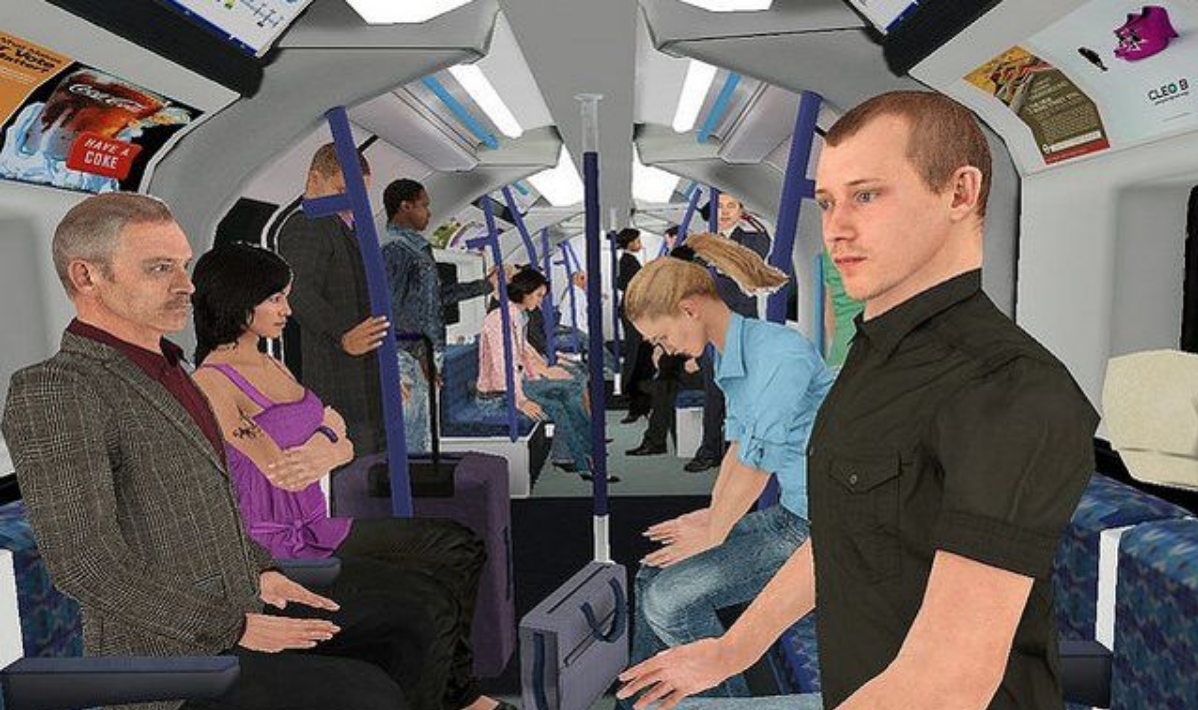


Virtual Reality for the Real Estate Industry
Imagine being able to tour a prospective home from miles away, walking right through the property as if you were there. Imagine placing life-size models of your own furniture into that house, to see if they fit. Typically potential home buyers will tour dozens of properties in person before making a decision to buy. However, with virtual reality, buyers can now tour those homes quickly by slipping on a VR headset and then deciding which make sense to visit in-person.


Virtual Reality for the Social Industry
Just because you’re inside a headset doesn’t mean you’re alone. You could jump into a video game avatar to chat and play, or commute to work by inhabiting a telepresence robot with cameras mounted on its body. Can we connect and meaningfully communicate across distances that way? According to a study by Greenlight, the percentage of respondents who said they’d use social VR apps at least once a week was 75.7%, including 28.1% who reported they’d want to spend time using social VR every day. It's no coincidence that Facebook, of all companies, spent nearly $3 billion to buy Oculus.


Vivamus pellentesque vitae neque at vestibulum. Donec efficitur mollis dui vel pharetra.